
Your Firm May Not Need Another AI Agent. It Needs An Operating Layer: Agentic-OS
· Nicholas Oneill
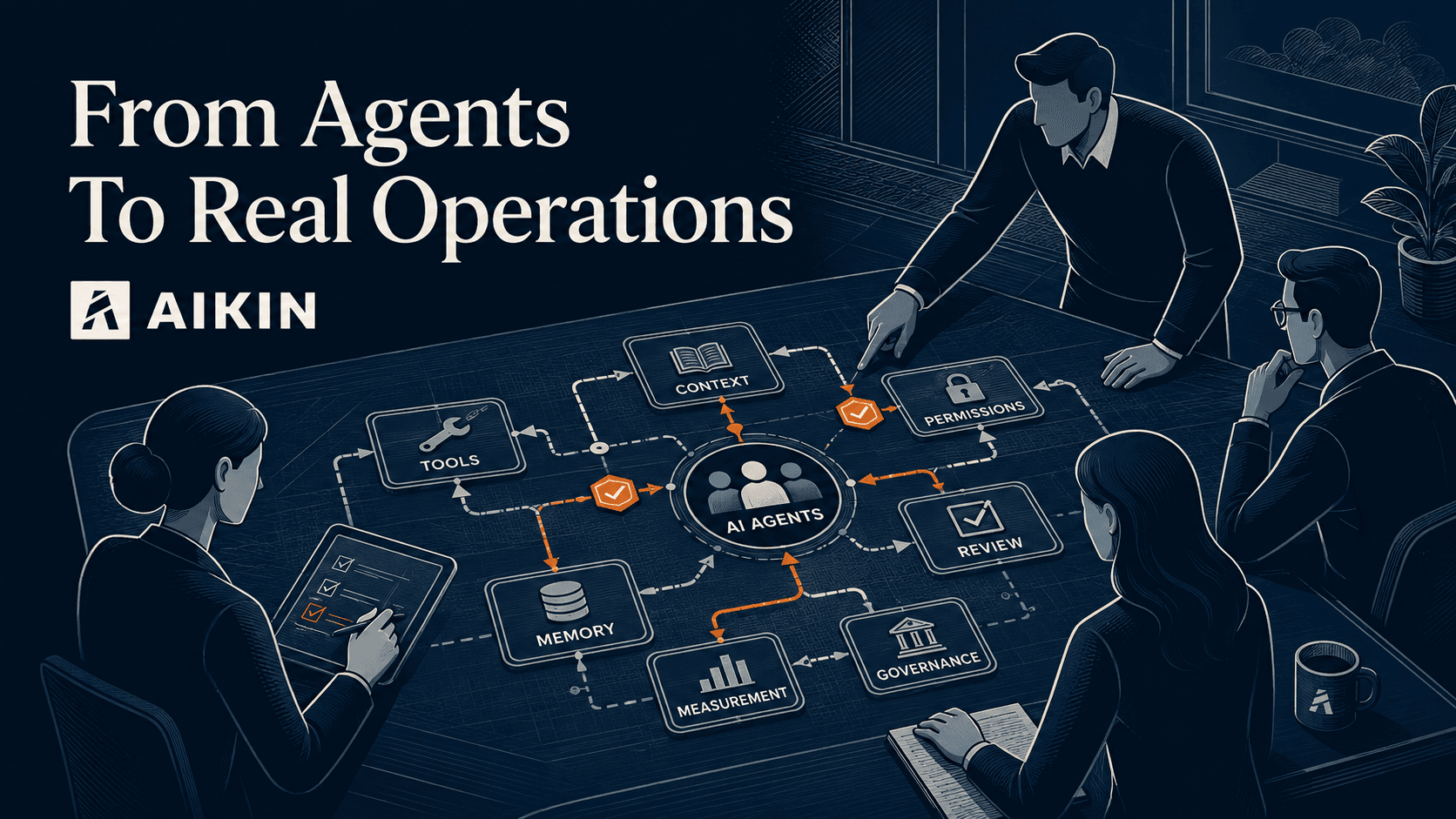
Why isolated AI agents stall, what an Agentic-OS adds, and how context, tools, permissions, review, memory, measurement, and governance turn AI into work the firm can trust.
Most firms do not need convincing that AI can help with work.
They have seen it already: ChatGPT, Claude, prompt libraries, and early agent ideas for intake, research, drafting, bookkeeping, or document review.
Early results can be useful. A good agent can summarise a file, draft an email, classify a request, or answer a narrow question.
Then real work begins: someone has to give the agent the right client context and choose the safe file.
Someone also has to check the output, update the next system, decide if partner review is needed, and explain the decision.
If people still answer all of that by hand, the firm does not yet have an operating system for AI. It has people holding the system together around the tools.
So many AI projects get stuck there. Agents can do useful tasks, but the work around them has not been designed.
Agentic-OS means:
An operating layer around AI agents.
It connects agents to context, tools, permissions, review paths, memory, outcomes, and governance.
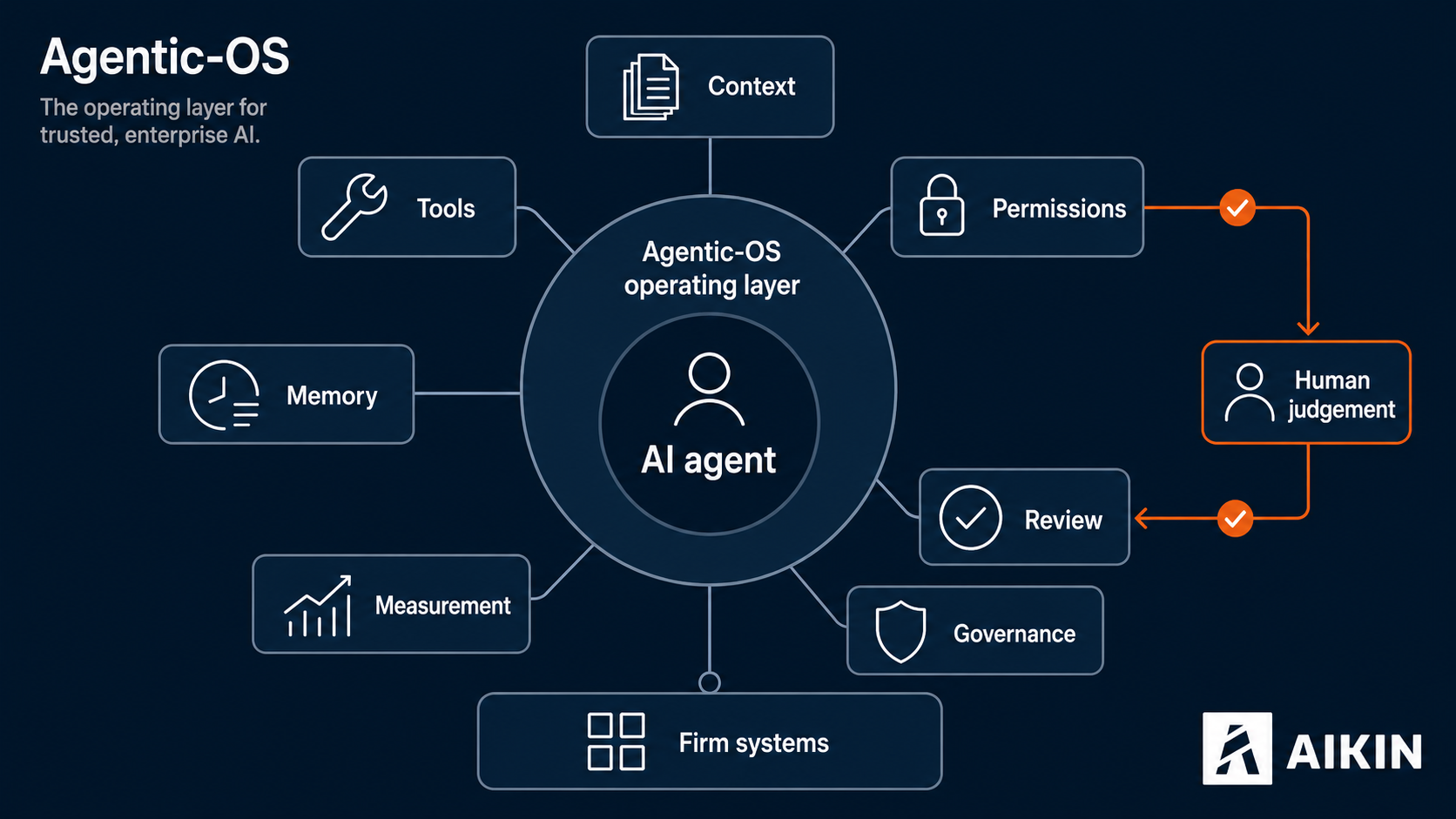
An AI agent can perform or coordinate a task. But an Agentic-OS makes that task work inside the firm.
Take a client update: a client-update agent can draft it, but operating design decides which matter it belongs to, what facts it may use, who approves it, and where it is recorded.
Incoming documents have the same problem: a document agent can classify them, but the layer decides which folder it can access, what counts as an exception, and who reviews uncertain cases.
So task execution is only one part. Operating design makes the work part of the firm.
Where isolated agents stall
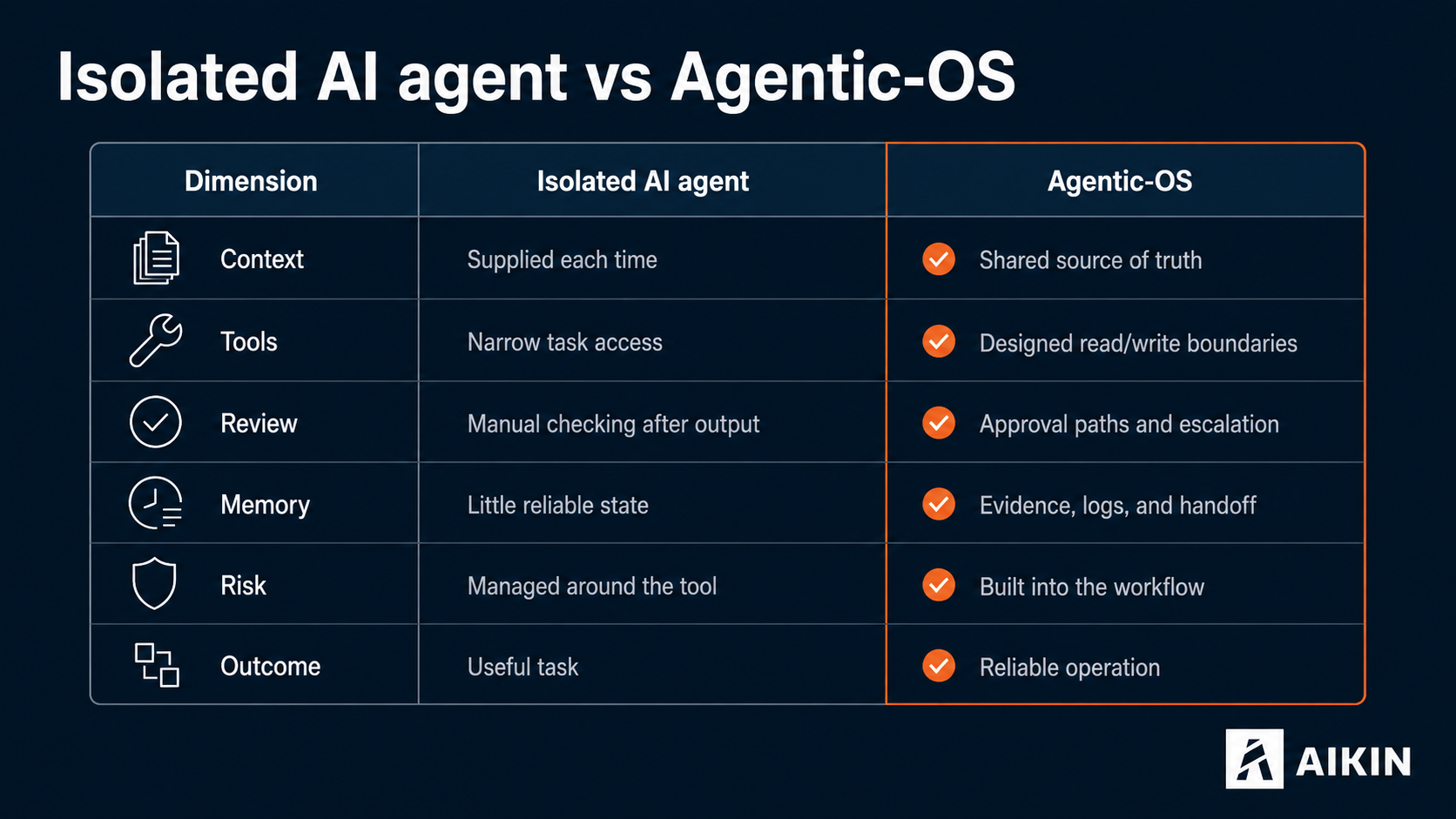
AI experiments are easy to start because the first boundary is small.
You can ask AI to summarise a document, draft an outline, turn a transcript into actions, or write a first email.
Those tasks can help, but they are not operational changes.
Real work has messy edges: client history, judgement, exceptions, standards, risk tolerance, permissions, and accountability.
So for a professional-service firm, the point is rarely whether AI can produce something. It is whether you can rely on that output inside a real client workflow.
Many isolated agents stall there.
They cannot tell which source of truth matters. They often miss whether a decision is routine or sensitive.
And system updates or exception routes often sit outside their view.
Market data shows the same gap. McKinsey's 2025 State of AI research reports that AI use is widespread, but only about one third of organisations have begun scaling AI across the enterprise.
Same research links AI impact to workflow redesign, accountability, and validation. Deloitte's 2026 State of AI in the Enterprise report also reports that only one in five organisations has a mature governance model for autonomous agents.
Firms are not stuck because agents cannot do useful tasks. They are stuck because useful tasks do not become reliable operations on their own.
The operating layer
An operating layer is not one feature. Think of it as a set of design decisions around agents.
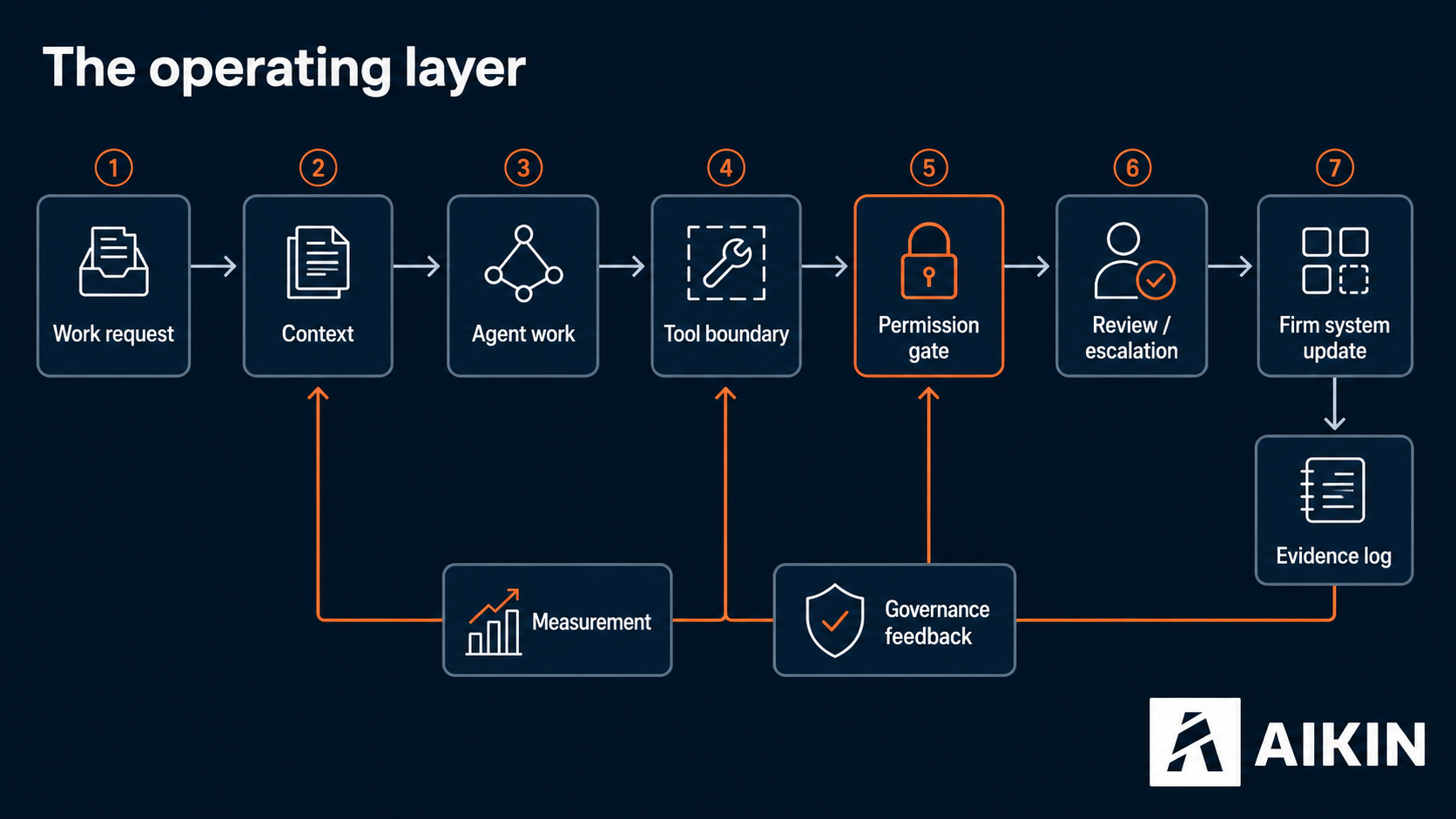
So start with context.
An agent needs the firm's knowledge, the right client facts, and the policies, decisions, design rules, or matter histories that matter.
Without context, an agent may produce fluent work. It may not produce the right work.
Then look at tools.
Tool access defines which systems an agent can read from and write to, and that difference matters.
Creating a draft is not the same as updating a record, sending a message, or changing a status.
Autonomy is not mainly a line in a prompt. Tool access decides what an agent can do.
Do not ask how autonomous the agent sounds. Ask what it can touch.
Permissions come next.
Read-only access to a narrow folder is not the same as permission to update a client record. Drafting a reply is not the same as sending it.
Proposing a classification is not the same as filing a return or committing the firm to a position.
Review and escalation need design too.
Some work should stay suggest-only. Routine actions may move to act-with-notification once trust is earned.
But actions touching money, production systems, public commitments, legal risk, client confidentiality, or strategy should always require approval.
Asking whether humans should be "in the loop" is too broad. Better design asks where human judgement belongs.
Memory and state matter as well.
If an agent cannot remember what happened, resume work, show evidence, or pass work to another process, people stay the glue.
Measurement matters too.
And an agent can feel useful without improving work. A firm needs to know whether the system saves time, reduces errors, improves quality, or makes review easier.
Governance belongs in the design, not after it.
NIST's AI Risk Management Framework organises AI risk management around governing, mapping, measuring, and managing risk. So a firm needs to know what the system should do, what can go wrong, how risk is measured, and who remains accountable.
Draw agent boundaries around work, not job titles
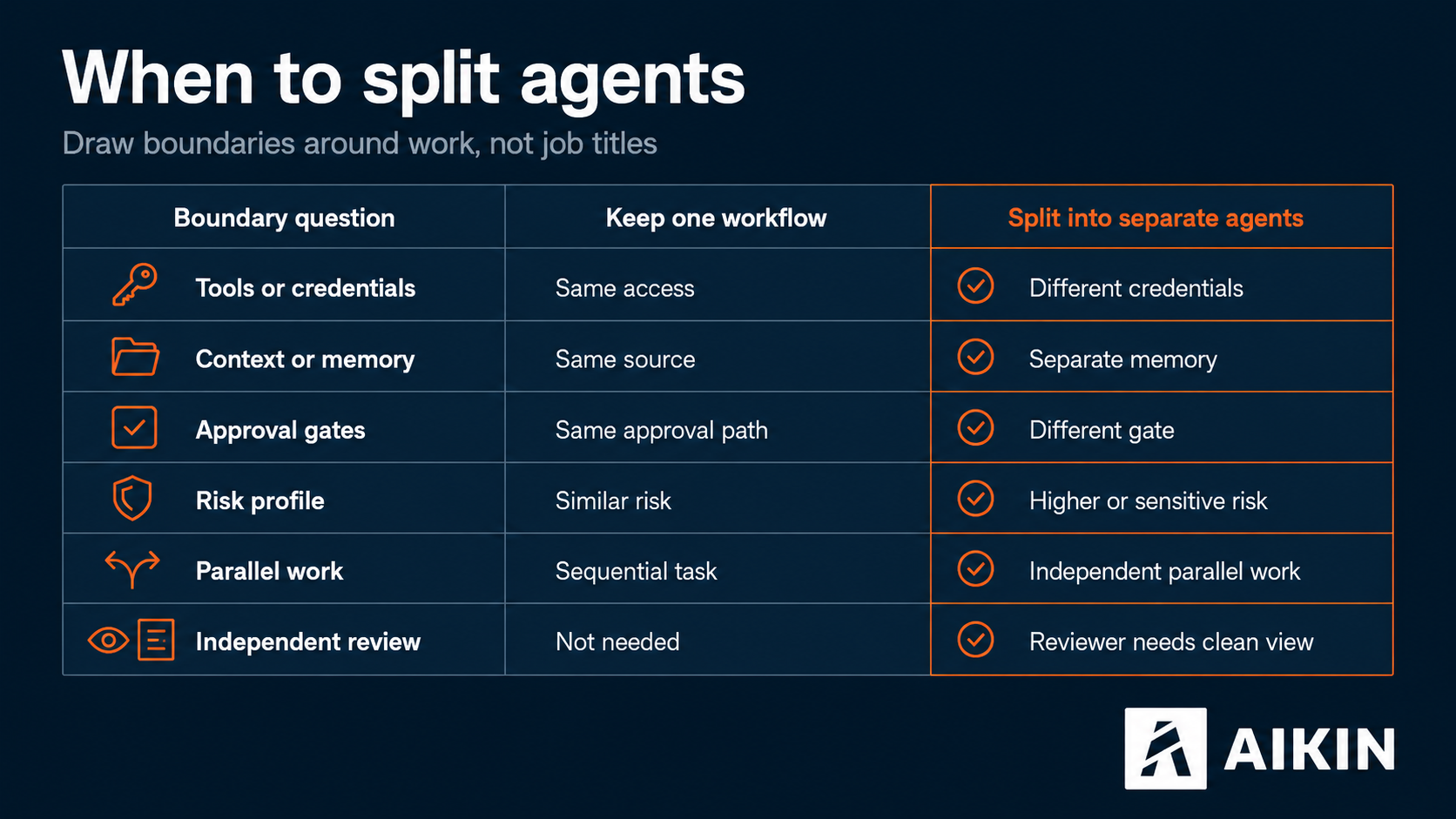
Once a firm sees the need for an operating layer, the next mistake is to design too many agents.
A common temptation is to turn every human role into an agent: research, drafting, review, client update, intake, compliance, design, QA.
Some boundaries help. Many just copy how humans organise themselves.
Human job titles exist for hiring, management, skills, accountability, career progression, and cognitive limits. Agents do not share all of those constraints.
Instead of turning roles into agents, look for places where the work needs a separate boundary.
Separate work when the boundary changes something real:
- Different tools or credentials.
- Different context or memory.
- Different approval gates.
- Different risk profile.
- Independent parallel work.
- Independent review or evaluation.
If none of those changes, the firm may need one better workflow, one modular agent, or one clearer operating layer.
If a drafting agent and a review agent share the same context, tools, permissions, and approval path, separating them may only add theatre. If the reviewer needs an independent view, evidence trail, and no access to the drafter's reasoning, separation may be essential.
Boundaries should follow work, not job titles.
Why professional services feel this first
Professional-service firms sell judgement, so isolated AI tools feel both promising and uncomfortable.
A law firm may want help with research, drafting, intake, review, and client updates. An accountancy may want help with document collection, categorisation, filings, queries, and drafts.
A design agency may want help turning research, briefs, design systems, and client logic into specifications.
In each case, value is not simply more output.
Value means knowing whether the output is good enough, what context it depends on, who reviews it, and how the firm remains accountable.
So for professional services, the "just add agents" story is too thin.
A generic agent can draft a clause. Someone still needs to know whether it fits the matter, jurisdiction, client appetite, and partner judgement.
It can categorise a receipt. A reviewer still needs to know whether it follows client conventions and what should be escalated.
It can turn a design prompt into a screen. A team still needs to know whether it respects the design system, handles edge cases, and is build-ready.
Agents can take on more load. Professional judgement still needs an operating system.
Aikin's point of view
Aikin uses Agentic-OS to describe this operating layer around AI agents.
Work starts before tool choice. Map how the firm operates, break work into tasks, decide where judgement stays human, define escalation thresholds, and design agents around the right boundaries.
Right boundaries matter more than more agents.
More capable models do not remove this layer. They make it more important, because stronger agents need clearer limits.
After AI experiments, the next step is not always a bigger prompt library or another point solution. For many firms, it is operating design.
Before buying another agent
Before buying or building another agent, shift the review from tool choice to operating design.
Start with the work you want to move from experiment to operation, then identify the context the agent needs and where that context should live.
Map which systems it may read from or write to, set approval rules for risky actions, and decide who remains accountable for the final output.
Keep the state, logs, and evidence that need to persist, then measure whether the agent improved the work rather than moved it around.
And be honest about where human judgement creates value, versus where people are only acting as router, memory, reviewer, and rulebook.
Less exciting than a demo, but it decides whether AI becomes part of how the firm works.
Your firm may need agents. If they remain isolated, each new one adds another thing for people to coordinate, supervise, remember, and defend.
Start with the operating layer.
~From Nicholas Oneill and the Aikin team.
FAQ
What is an Agentic-OS?
An Agentic-OS is the operating layer around AI agents, connecting context, tools, permissions, review, memory, measurement, and governance so agent-assisted work can run inside the firm.
How is an Agentic-OS different from an AI agent?
An AI agent performs or coordinates a task, while an Agentic-OS decides how that task connects to systems, approvals, evidence, accountability, and human judgement.
Why do isolated AI agents stall?
They stall when they lack the right source of truth, system access, exception paths, or review model, so people stay responsible for routing, memory, risk, and clean-up.
What should a firm design before buying another agent?
Design the operating layer first: context, tool access, permissions, approval points, persistent evidence, and accountability.
Where should humans stay involved?
Humans should stay involved where judgement, money, confidential data, client commitments, public-facing decisions, or material risk are involved.