
What happened when I tried to scale a four-person software company with AI agents.
I went all-in on my side gig at the worst possible moment.
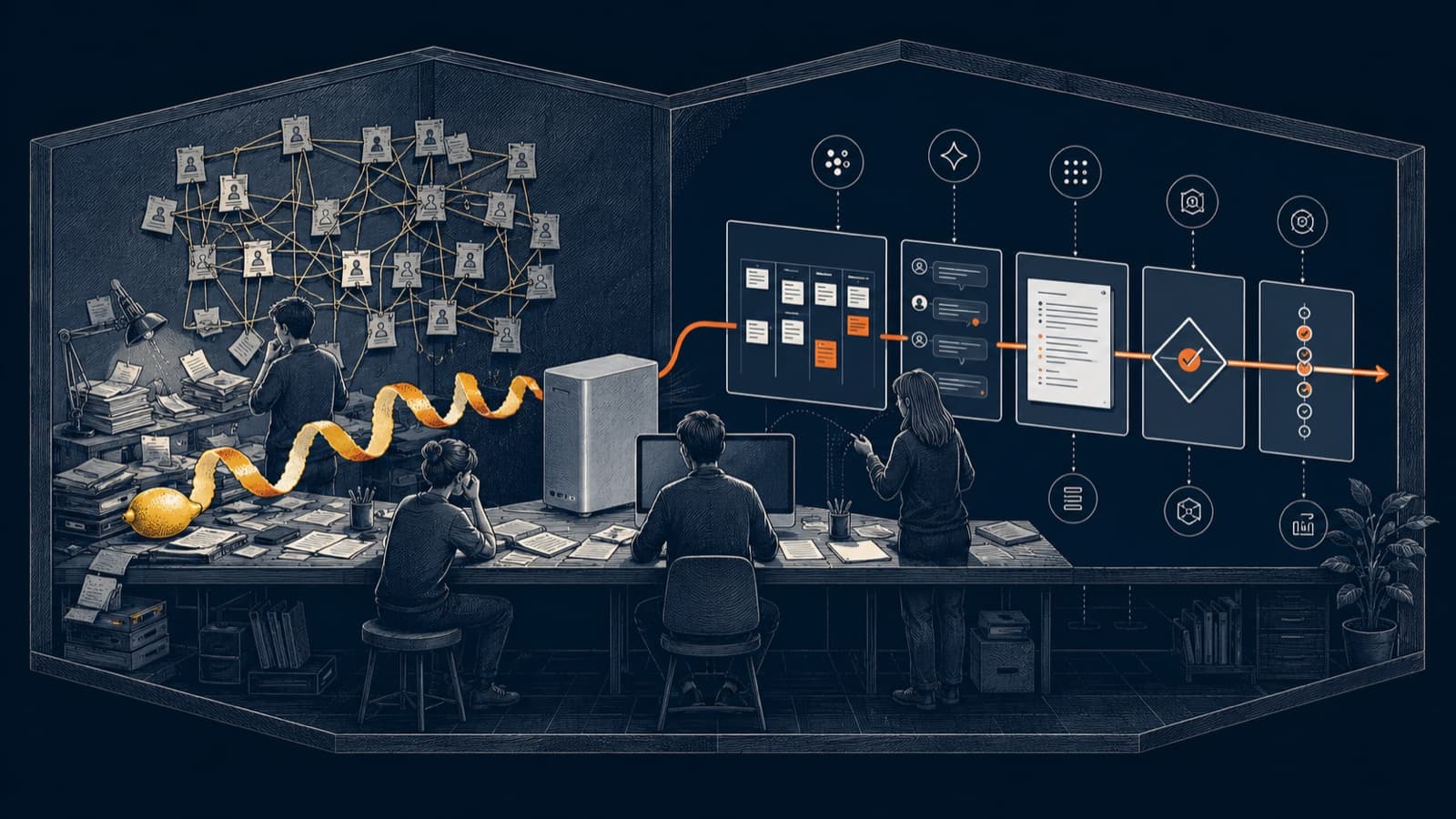
It was December 2025. My side gig was a small software company, a team of four. When I committed, Claude Code was a promising tool. Six weeks later it was an explosion: Claude Code everywhere, OpenClaw one of the fastest-growing open-source projects on GitHub, everyone suddenly running agents. By February it was abundantly clear to me that the thing we sold, building software, was about to get radically cheaper for everyone. Not a good time to bet on a software company. I had a choice: accept that I had bad luck with the timing, wrap it up, and return to the job market. Or turn the lemon into lemonade.
On a world scale, a well-paid, comfortable job as a product manager in a large organisation in the Netherlands would be considered fortunate. But I had always dreamed of being an entrepreneur and, having tasted it for the first time, I was determined to do everything I could to avoid going back to "just a job". Someone once told me that the difference between good and great footballers is that great footballers can make a good play regardless of the pass they receive.
This was the pass I got and I was determined to play.
My plan was to take our small software company and scale it with agents. Four people, harnessing agents, building software and taking on projects that would previously have needed a team many times our size. So I started building our team of agents.
This is that journey.
The org chart mistake
My instinct was to build an organisation. I had worked in large organisations for twenty years and been through my share of re-orgs. I knew org charts. So I built my agents based on that instinct: my first department, the innovation lab, had thirteen specialist agents and an orchestrator to run them, each doing the job of a human role in a traditional organisation. I bought a Mac mini to run it all. I thought it was amazing. I thought I was amazing.
I soon realised my mistake. Agents don't have the same constraints as humans, and just like in the human world, the handoff between agents is not free. The fewer handoffs, the better. A single agent performed better when similar roles with similar scope were combined. Thirteen specialists became six. (I wrote another article about exactly this misstep.)
Over the coming months of trial and error, I defined my agentic organisation.
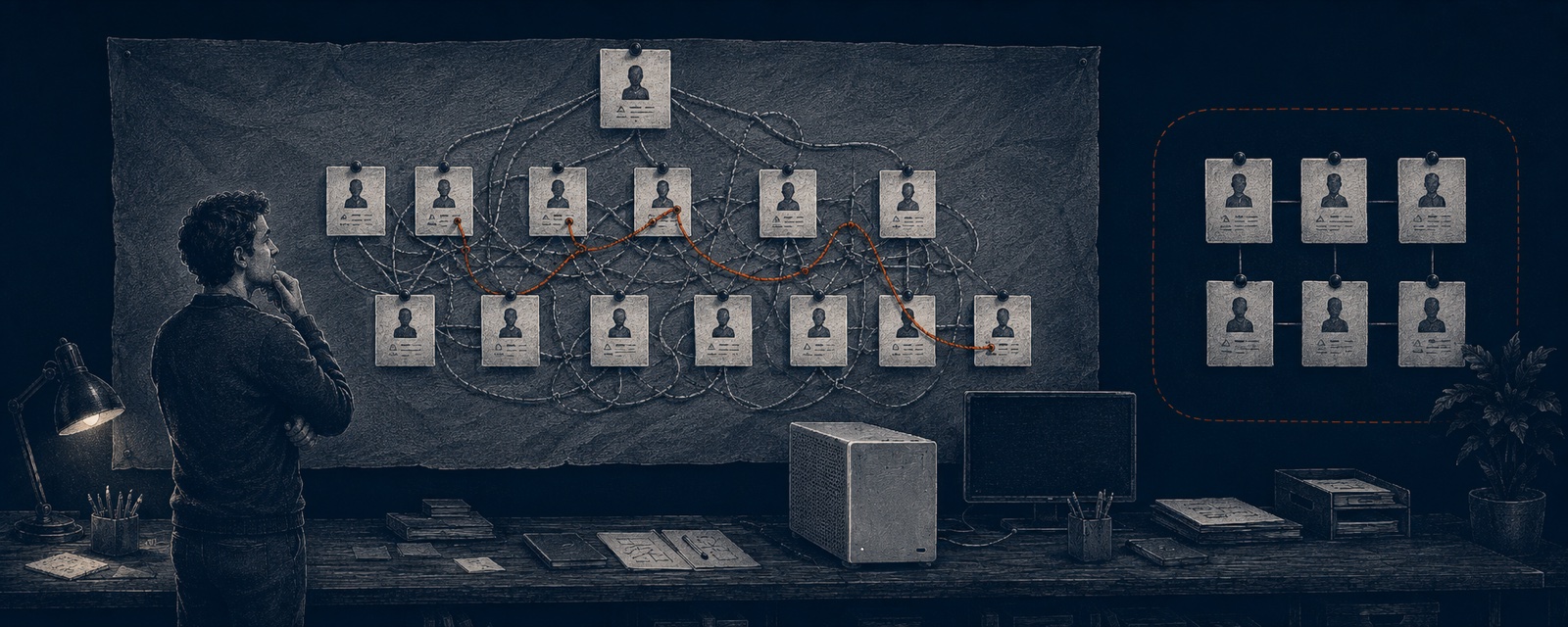
The first agent organisation copied a human org chart: thirteen specialists, an orchestrator and too many handoffs.
Seeing the work
Next I needed a way to see what the agents were doing. I had heard about people setting up pixel art: a Habbo Hotel-style office where you watch your agents walk around and collaborate. But I had been working with remote teams for a decade, and we never needed pixel art. Why were agents any different? We needed a kanban and a communication channel and two golden rules, just like humans.
Rule one: all work must be on the kanban board. If it isn't on the board, we don't know its priority, and there is no record of the work or any way to verify it was done. (The only exception is ongoing admin, like posting a weekly update.)
Rule two: all communication happens in public Slack channels. No DMs. If it's work-related, it's knowledge the rest of the team can potentially use.
Most human engineers struggle with these rules. The agents don't complain.
They have the opposite problem. One thread ran to 68 messages, and only about 21 of them said anything. The agents kept confirming each other's confirmations, each mention waking the next agent, which produced another confirmation. One message said "no new fact, no action" and was still 962 characters long. I had to write a rule no human team needs: silence is a valid turn.
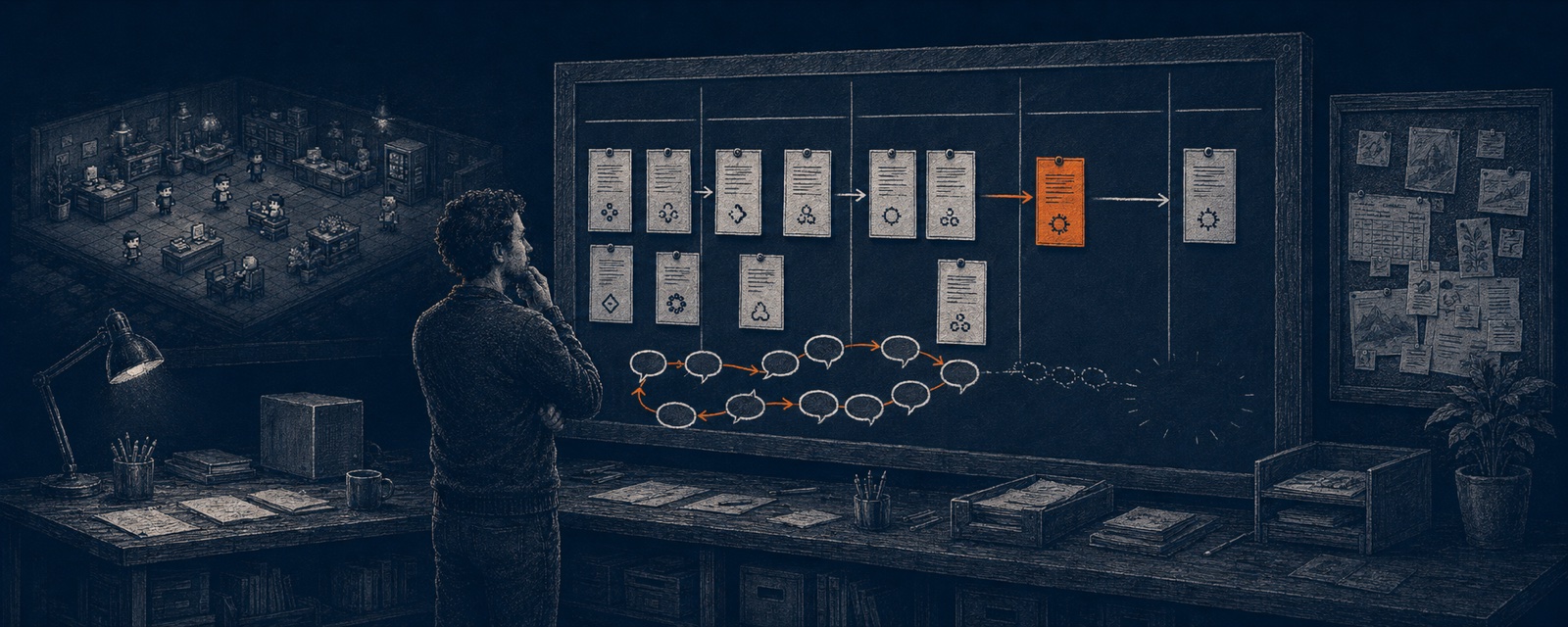
Seeing the work meant replacing an imaginary agent office with a kanban board and public communication.
So today I can @mention Ed, my lead engineer agent, in Slack to fix a bug, then watch him create the ticket and watch the card move across the kanban board. In Slack I can see him discuss the intended behaviour with Dana, my lead designer agent. If they need further clarification, they escalate to me in the channel.
Escalation had to be designed too, not just enabled. Early on I was asked to approve the same design eight times: Dana re-firing her own request six times while two other agents helpfully re-asked on her behalf. Now the rule is one approval per decision, one owner, and nobody re-escalates a decision that is already pending.
And the decisions each agent can and cannot make on its own are defined and adjustable. As an agent earns trust, I relax its rules. Autonomy is earned, the same way it is with humans.
Keeping a team in sync
Setting up a system for one person is easy. I needed one that could scale across a team: humans and agents, on different machines, all working from the same state. There were three things to keep in sync: the code, the agents, and the context.
The code was the easy part: Git, no different from today. The agents run on Anthropic's Claude Managed Agents. The context was the hard one: strategy, marketing, sales, everything the whole team, human and agentic, needs to share. I tried several solutions and made some costly mistakes along the way (the cloud syncing tools I tried were not fit for the purpose). I landed on Obsidian with Obsidian Sync. It's natively Markdown and syncs without missing a beat.
So that was the stack: code synced through GitHub, agents in Anthropic's cloud, knowledge in Obsidian, all of it running through the Mac mini. It was beautiful.
From theory to practice
I didn't wait for perfection. I had real client projects, so I got to work and put them through the system. Not demos. Real work, with real clients.
Hundreds of iterations followed. How agents mention each other. When they escalate. Where their audit trails live. Every gap between how the system should work and how it actually behaved showed up only under real load and got fixed one issue at a time.
The penny drops
While I was building all this, I kept showing it to friends and colleagues. The response was always the same: "This is amazing. Every company is going to want this."
That's when the penny dropped. This was the pivot. The system I had built to save a small software company was the company. Aikin's mission now is to help other firms set up their own agentic operating system, designed around how they actually work.
Bad pass, good play. Lemonade.
If your firm is somewhere on this journey, we should talk.